
Open 24 hours, 7 days a week
Gas line repair and installation
A plumber pressure-tests the line to locate a leak or confirm a new run is sound, and connects or repairs the line to code before anything is put back into service.
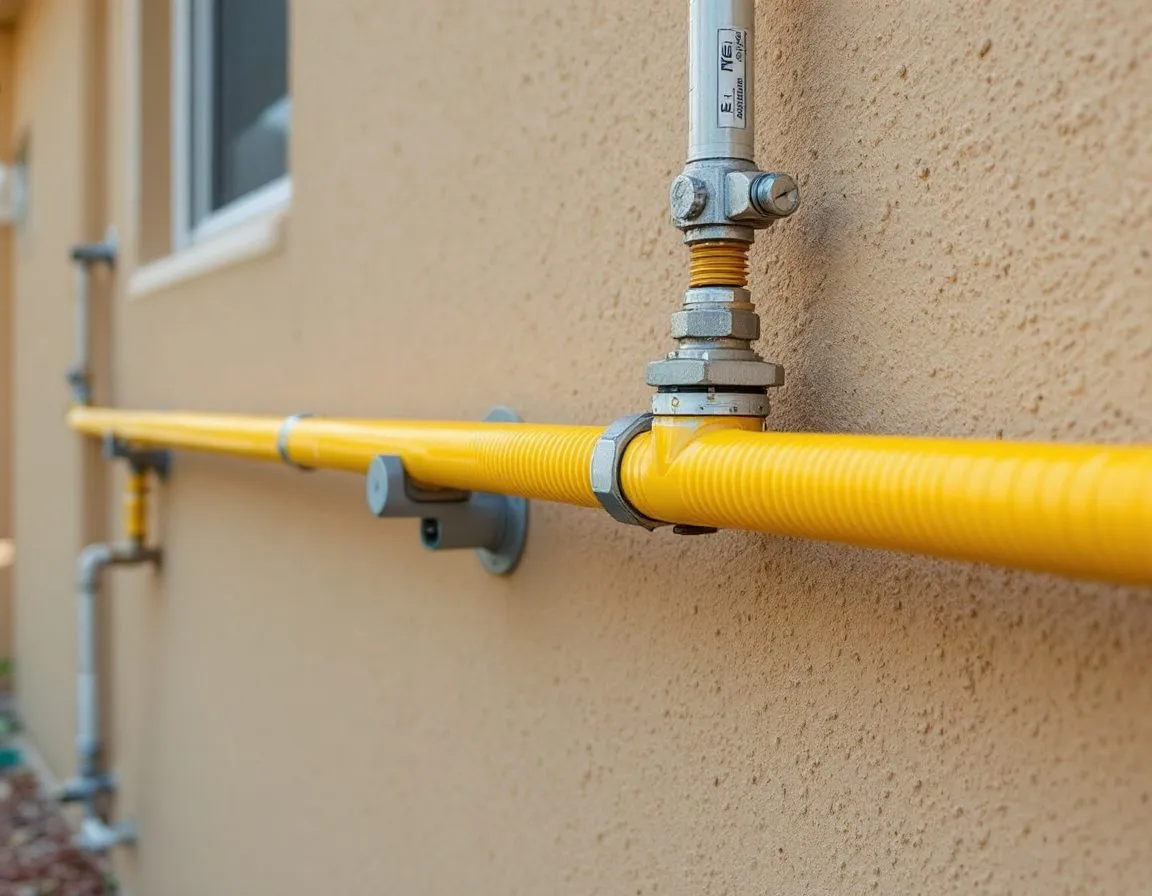
How do I know if I have a gas leak?
The most reliable signs are a distinct sulfur or rotten-egg smell near an appliance or along a line, a hissing sound near a connection, or dead vegetation in a patch of yard above a buried line with no other explanation. If you smell gas, leave the area right away, avoid switching anything electrical on or off, and call from outside rather than investigating it yourself or trying to locate the source.
A pressure test on the line is what actually confirms a leak’s location once it is safe to check, rather than relying on smell alone to pinpoint it. This is not a call to treat casually or wait on, and it is one of the few situations on this list that is always treated as urgent, no exceptions, dispatched the same way any active safety issue would be.
When to call immediately
Signs of a gas line problem
A sulfur or rotten-egg smell
The most common sign of a leak near a line or appliance connection.
A hissing sound near a connection
Worth investigating from a safe distance and calling immediately.
An appliance that will not stay lit
Can point at a supply issue rather than the appliance itself.
Dead grass in a line above a buried line
A possible sign of a leak affecting the soil above it.
New installations
Adding or extending a gas line
Connecting a new appliance, a range, a dryer or a water heater, to an existing gas system involves sizing the line correctly for the added demand and testing the full run for leaks before it goes into service. A permit is required for gas line work in most of Broward County, and the completed work is inspected before the gas is turned on.
Undersized piping is a common issue when a line was run years ago for fewer appliances than are on it today, which is worth checking if an appliance seems underpowered rather than assuming the appliance itself is at fault.
What counts as an emergency
A gas smell, and what gas line work actually covers
A gas smell anywhere near an appliance is treated as urgent regardless of how faint it seems, because a small leak at a fitting can become a larger one, and there is no way to judge severity from smell alone. Leaving the area, avoiding any switch or open flame, and calling from outside the home is the right sequence regardless of what turns out to be causing it.
Beyond leaks, gas line work covers running a new line for an appliance being added, such as a range or a generator, and pressure testing an existing line before it is reconnected after other work nearby. Any gas line work is inspected and permitted the same way as other plumbing work, never treated as a shortcut task.
Questions
Gas lines, answered
What should I do if I smell gas right now?
Leave the area, do not switch anything electrical on or off, and call from a safe distance. This is treated as an emergency call.
Do I need a permit to add a gas line for a new appliance?
In most of Broward County, yes. The permit and inspection are part of getting the work done correctly.
Can you tell if my gas line is undersized?
Yes, a plumber can check the line’s capacity against what is connected to it and recommend a fix if it is undersized.
How do you find a leak that has no obvious smell?
A pressure test on the line will show a drop if there is a leak, even a small one that is not yet noticeable by smell.
Related
Related services worth knowing about
Live dispatch
Smell gas, or need a new line run?
Call right away if you smell gas. For a new installation, call to talk through what you need connected.
No obligation to book after the call.