
Open 24 hours, 7 days a week
Trenchless sewer repair without digging up the yard
A new liner or pipe is pulled through the existing line from a small access point, so a mature yard, a driveway or a patio does not have to be excavated along the whole run to fix what is underneath it.
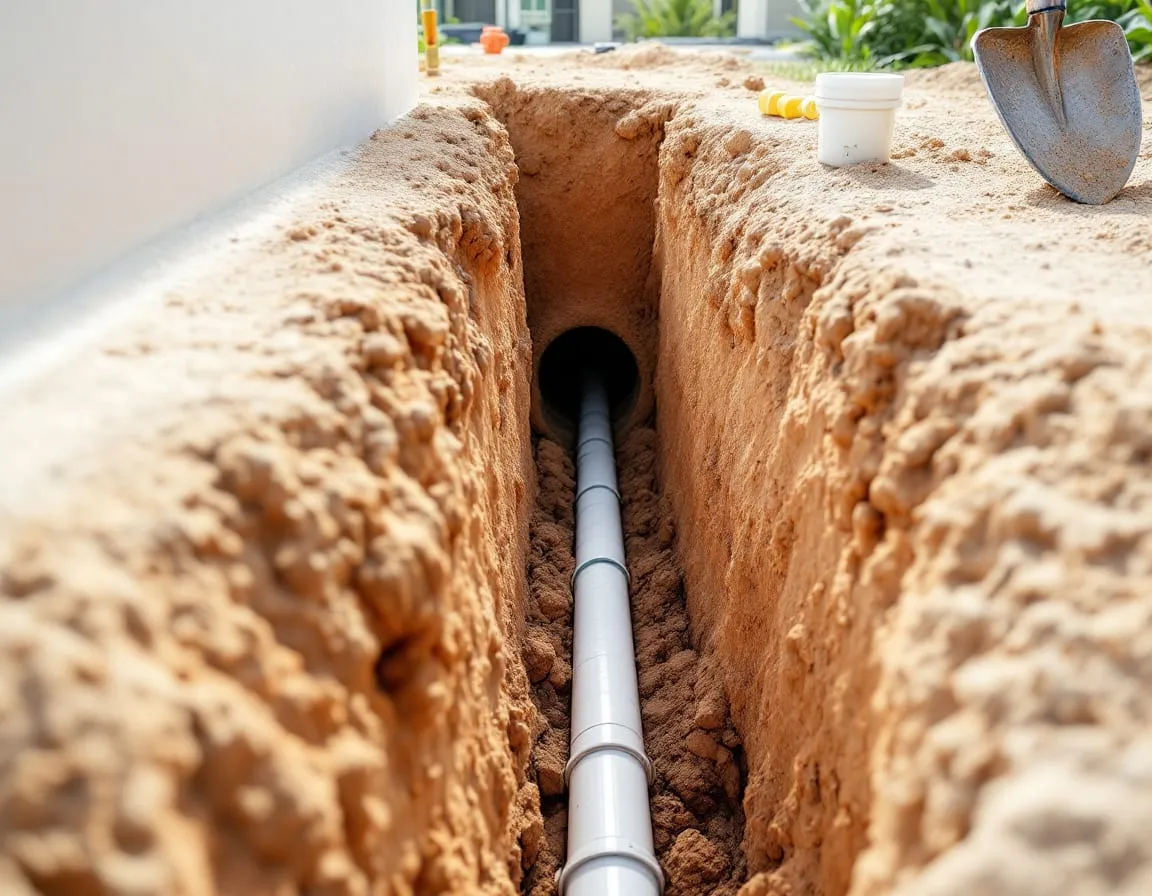
How does trenchless sewer repair actually work?
A small access point is dug at each end of the damaged section, and either a resin liner is pulled through the existing pipe and cured in place, or a new pipe is pulled through as the old one is broken apart around it. Either method fixes the line without opening a trench along its full length, which is the whole point of choosing it over traditional excavation.
It is not the right method for every situation. A line that has collapsed rather than just deteriorated, or one with a severe offset, may still need to be dug up in that section instead. A camera inspection first is what determines which approach the line actually calls for, rather than assuming one method fits every job, and it is a small step that saves picking the wrong one.
When trenchless is worth asking about
Good candidates for a trenchless repair
A line that is deteriorated but still round
Corroded or cracked, but not collapsed or badly offset.
A line running under an established yard or driveway
Landscaping or paving that would be costly to dig up and restore.
Recurring root intrusion along a long stretch
A liner seals the joints roots would otherwise keep finding.
An older cast iron or clay line with multiple soft spots
Deterioration spread along the pipe rather than at one point.
What it does not fix
When excavation is still the better option
A line that has fully collapsed, is crushed, or has shifted enough that its sections no longer align cannot simply be relined, because there is no continuous pipe left to pull a liner through. In that case, digging up the affected section and replacing it directly is the more reliable fix, even though it disturbs more of the yard.
A camera inspection settles which situation you are actually in before either option is proposed, so the choice is based on the line’s real condition rather than which method is easier to sell.
How it compares
How trenchless differs from digging up the yard
A conventional sewer repair trenches the full length of the damaged run, which means cutting through landscaping, a driveway or a patio to reach the pipe. Trenchless methods work through one or two small access points instead, either pulling a new liner through the existing pipe or bursting the old pipe while pulling a new one in behind it.
Not every situation qualifies. A line with a severe offset, a collapsed section or the wrong slope for the method chosen still needs traditional excavation, which is exactly what a camera inspection beforehand is for, rather than assuming trenchless is the automatic answer for every failed line.
Questions
Trenchless sewer repair, answered
Is trenchless repair as durable as a traditional dig-up?
A properly installed liner is built to last for decades, comparable to a new pipe, provided the line was a good candidate for lining in the first place.
How much yard actually gets disturbed?
Typically just the two small access points at each end of the section, rather than a trench along the full run.
Can this be done on a line under a driveway or patio?
Yes, that is one of the situations where trenchless repair is most often worth considering, since traditional excavation there is disruptive and costly to restore.
How do you decide between lining and pipe bursting?
It depends on the pipe’s current diameter, material and condition, which the camera inspection and the plumber’s assessment determine before recommending either.
Live dispatch
Want to avoid digging up the yard?
Call and a plumber can run a camera down the line to see whether it is a good candidate for a trenchless repair.
No obligation to book after the call.