
Open 24 hours, 7 days a week
Sewer camera inspection before you guess
A waterproof camera is fed down the line to show its actual condition on a monitor in real time, so a decision about repair, replacement or a home purchase is based on what the line looks like, not an assumption.
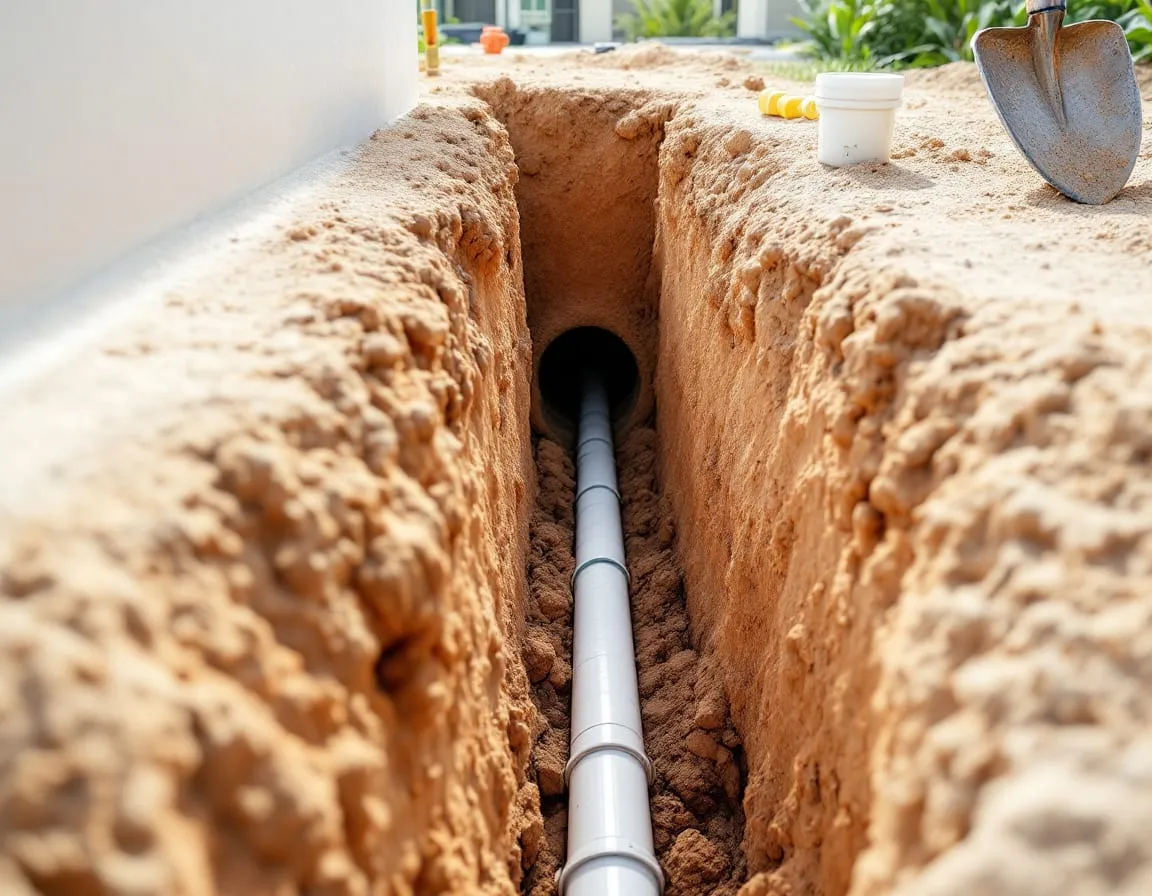
When does a sewer line actually need a camera inspection?
Three situations come up most often: a recurring clog or backup that keeps returning after clearing, buying an older home and wanting to know the real condition of its drain lines before closing, and planning any major landscaping or construction that would run over or near the line. All three are cases where guessing is expensive and a camera settles it directly, in real time, on a screen you can see for yourself rather than taking anyone’s word for it or waiting to see whether the problem gets worse on its own.
The camera shows cracks, offsets, root intrusion, scale buildup and collapsed sections on a monitor as it moves through the pipe, and the footage can be reviewed with you afterward rather than summarized secondhand. Seeing the actual condition of the line is what turns a vague worry into a specific, answerable question.
When to ask for one
Good reasons to request an inspection
A clog that keeps coming back
Worth seeing what is actually happening rather than clearing it again.
Buying a home built before the 1970s
Cast iron or clay lines that age are worth checking before closing.
Planning major landscaping or construction
Knowing exactly where the line runs and its condition before digging.
A sewer smell with no obvious source
A camera can find a crack or joint failure a nose alone cannot locate.
What the footage actually shows
A direct look, not a guess from the surface
The camera records as it travels the line, and a locator on the equipment can mark the exact position of anything it finds relative to the surface, which is what makes a targeted repair possible instead of digging speculatively. This is the same tool used to confirm whether a line is a candidate for trenchless repair or needs to be excavated.
For a home purchase, the footage becomes something concrete to bring to a negotiation or a repair estimate, rather than relying on the age of the house alone as a proxy for the condition of its plumbing.
What the camera finds
What an inspection actually shows, and why it matters
A camera run down the line shows exactly what a guess otherwise has to cover: a root intrusion at a joint, a bellied section holding standing water, a crack, an offset from ground settling, or simply grease buildup that looks worse from the surface than it actually is. That distinction changes what the actual repair should be, rather than starting with the most invasive option first.
The footage is also what a permit application or an insurance claim often needs as documentation, not just a plumber’s description of what was found. For an older home with cast iron or clay drain lines, an inspection before a sale or a major renovation is a way to know what is actually down there before committing to any work.
Questions
Sewer camera inspection, answered
How long does a camera inspection take?
Most residential inspections take under an hour, depending on the length and accessibility of the line.
Can I see what the camera sees?
Yes, the footage displays on a monitor in real time and can be reviewed with you.
Does this work on older cast iron and clay pipe?
Yes, the camera works in most pipe materials, and it is one of the more useful tools for assessing older lines specifically.
Is this something a general home inspector already does?
Usually not. A general home inspection typically does not include a sewer camera, which is why it is worth requesting separately for an older home.
Live dispatch
Want to know what is actually in the line?
Call and describe the situation, whether it is a recurring problem or a home purchase. A plumber can bring a camera and show you directly.
No obligation to book after the call.