
Open 24 hours, 7 days a week
Hydro jetting for lines a snake cannot fully clear
A high-pressure water jet scours the full diameter of the pipe, cutting through grease, scale and root intrusion rather than punching a narrow channel through the center of the blockage.
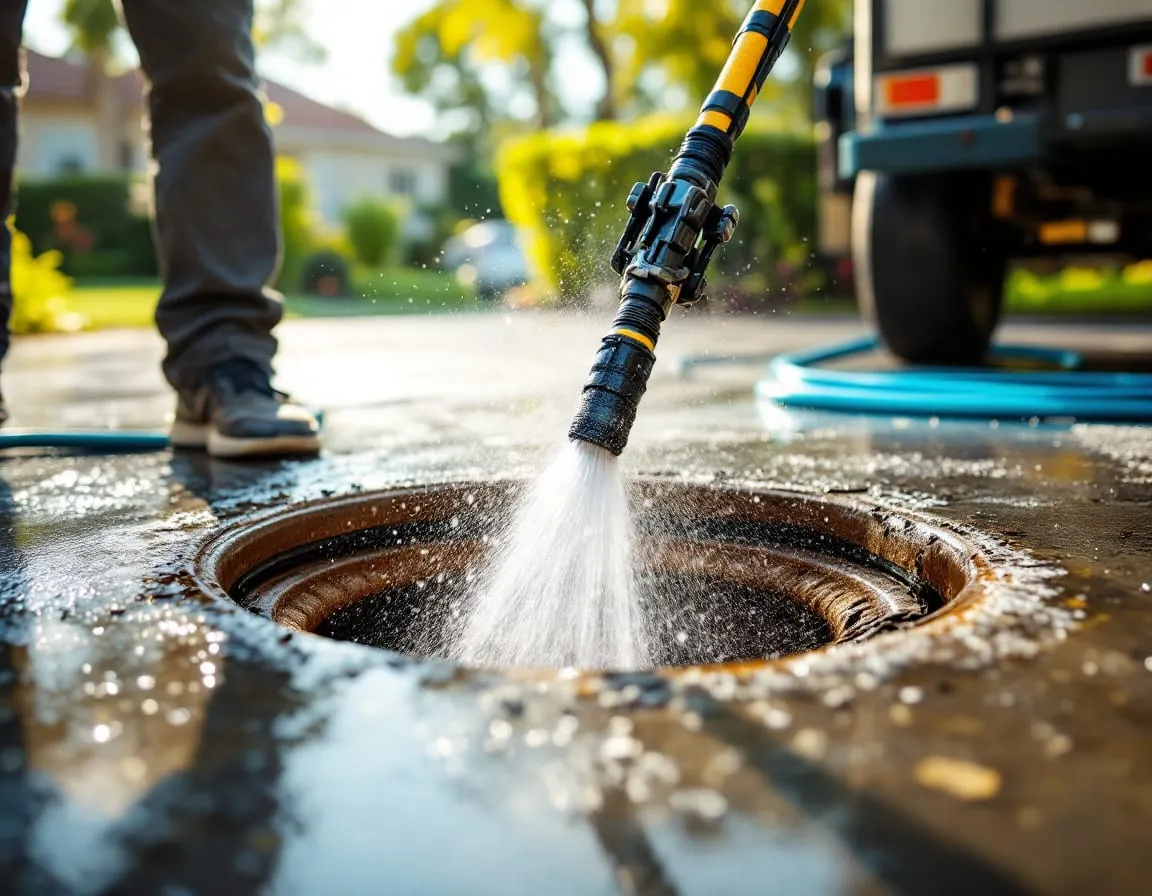
How is hydro jetting different from snaking a drain?
A mechanical snake cuts or pulls through the middle of a blockage, opening a channel that lets water flow again, but it leaves buildup along the rest of the pipe wall. Hydro jetting sends pressurized water through a nozzle that sprays outward as it moves, scouring the full width of the pipe rather than just the center. The result is a pipe that is actually clean, not just open again for now, which is the whole point of choosing jetting over a snake in the first place.
That matters most in a line with years of grease coating the walls, heavy root intrusion, or scale buildup in an older cast iron drain, where a snake keeps reopening the same narrow channel and the line keeps slowing back down within weeks. Jetting removes what a snake leaves behind, which is usually why a line that kept clogging finally stops.
When jetting is the right call
Signs a snake is not enough anymore
A line that clogs again within weeks of snaking
A narrow channel reopening and closing again as buildup rebuilds around it.
Heavy grease buildup in a kitchen or restaurant line
Grease that has coated the pipe wall over years of use.
Root intrusion confirmed by camera
Roots that have worked into a joint and keep regrowing after cutting.
Slow draining across the whole line, not one fixture
Buildup narrowing the pipe along its length rather than one localized clog.
What the pressure is matched to
Sized to the pipe, not one setting for everything
The pressure and nozzle used are matched to the pipe’s material, age and diameter. A modern PVC line and a decades-old cast iron drain do not get treated the same way, and a camera inspection beforehand confirms the line can take jetting rather than assuming it.
For a line with root intrusion, jetting is often paired with a follow-up camera pass to confirm the roots are actually cleared rather than just cut back at the surface, which is the difference between a fix that holds and one that needs repeating every year.
Is it safe
Whether jetting is safe for the pipe you have
Pressure is not a single fixed setting. A plumber matches the nozzle and pressure to the pipe material and its condition before starting, backing off for older or already-brittle pipe rather than running the same setting used on newer, more resilient line. That judgment call is part of the job, not an extra step.
Jetting reaches sections a snake cannot: a full-diameter scour along a horizontal run under a slab, or a line with multiple bends a cable would just follow around rather than clean. For a line that keeps backing up after repeated snaking, jetting is often the step that actually breaks the cycle instead of buying another few weeks.
Questions
Hydro jetting, answered
Is hydro jetting safe for older pipes?
The pressure is matched to the pipe’s condition, and a camera inspection beforehand confirms the line can handle it. A severely deteriorated line may call for repair first instead.
Does jetting remove roots completely?
It clears roots present in the line at the time of the service. Roots can regrow through the same joint over time, which is a structural issue jetting does not fix on its own.
How is this different from a plumbing snake?
A snake cuts a channel through the blockage. Jetting scours the full width of the pipe, removing buildup along the walls rather than just opening a path through the middle.
How often does a line need jetting?
It depends on what is running through it. A commercial kitchen line needs it far more often than a typical residential bathroom line.
Live dispatch
A line that will not stay clear after snaking?
Call and describe what has already been tried. A plumber can tell you whether jetting is the right next step.
No obligation to book after the call.